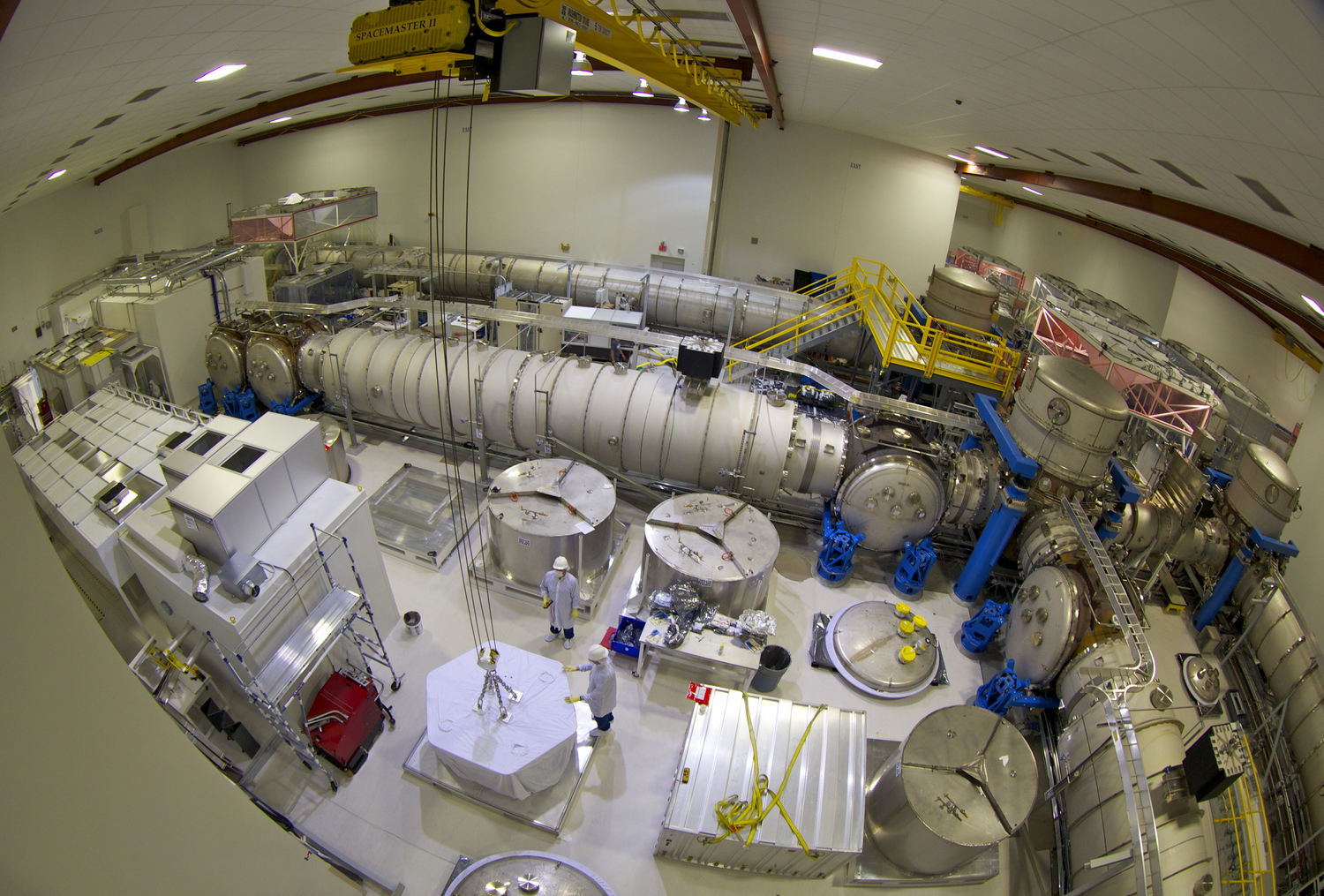
Image: Caltech/MIT/LIGO Lab
We build and refine the instruments that turn faint ripples in spacetime into discoveries. The Laser Interferometer Gravitational-Wave Observatory measures displacements a thousand times smaller than a proton — a feat that demands relentless attention to every source of noise, drift, and instability. Our group works at the Hanford and Livingston sites, diagnosing sensitivity limits and deploying fixes that push the detectors closer to their quantum and thermal noise floors.
We are deeply involved in LIGO-India, designing control systems, seismic isolation strategies, and digital twins that will bring a third detector online in the global network. In parallel, we are building toward the next generation: cryogenic silicon interferometry (LIGO Voyager) promises a ~5× sensitivity leap, while our adaptive optics work corrects thermal and alignment distortions that limit high-power operation.
Underpinning everything is materials science. Coating thermal noise is a dominant noise source in current detectors, and we develop low-loss thin-film coatings and novel materials to beat it. Every decibel of noise we remove expands the observable universe — revealing mergers, neutron stars, and phenomena we haven't yet imagined.
Active Projects
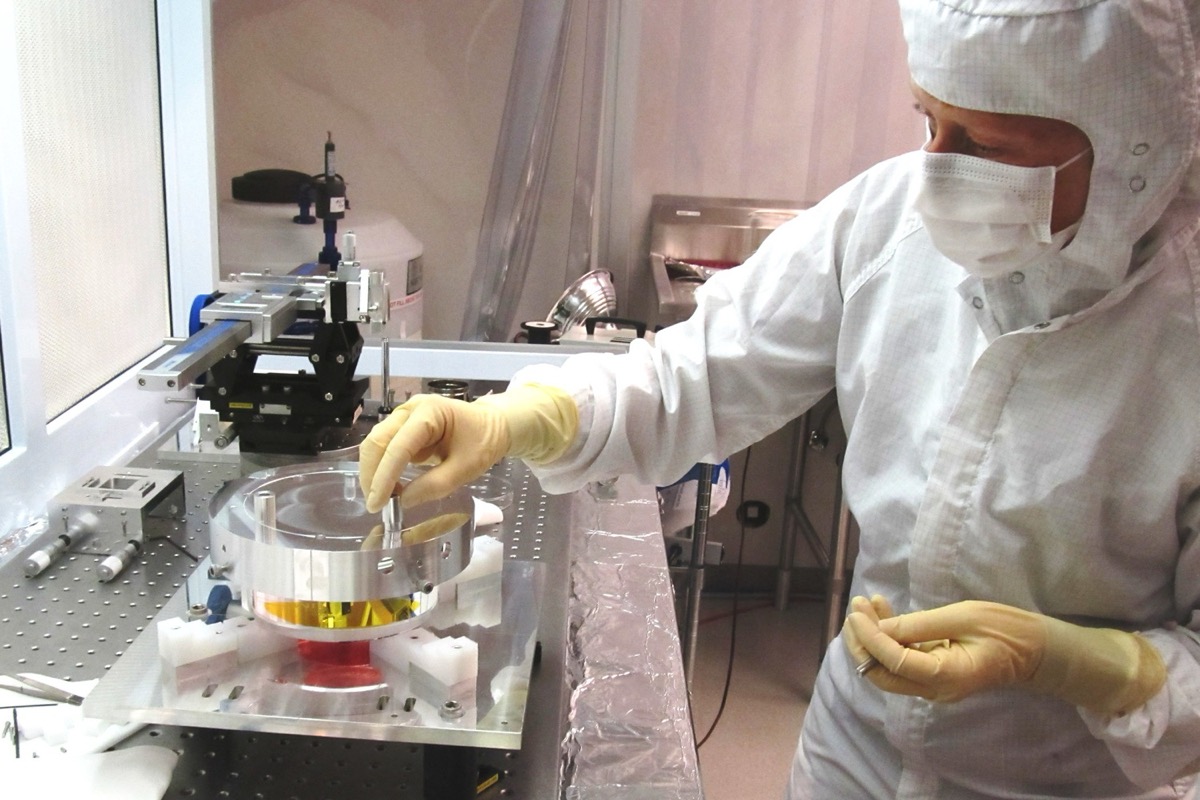
LIGO Adaptive Optics
Develop adaptive optics techniques to correct thermal and alignment distortions in LIGO interferometers, improving sensitivity at high laser power.
Learn more →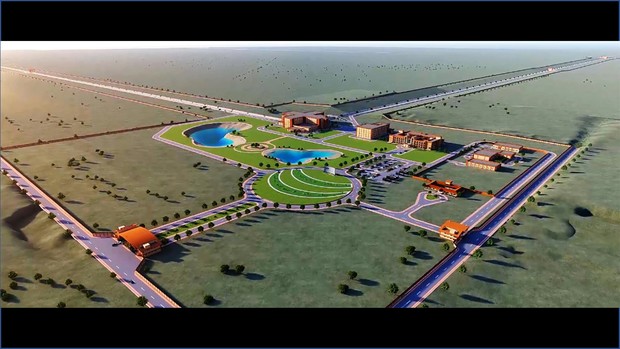
LIGO India
A third LIGO detector at Aundha Nagnath, India that will transform gravitational-wave source localization, double binary neutron star detection rates, and enable pre-merger alerts for multi-messenger astronomy.
Learn more →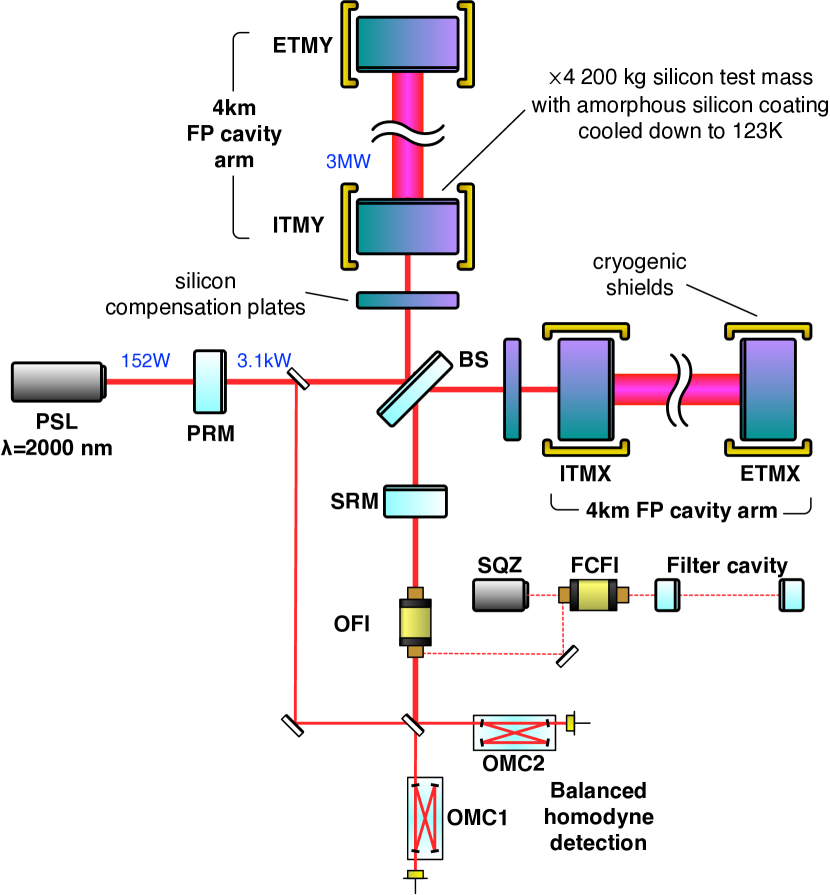
LIGO Voyager
Design and prototype cryogenic silicon interferometer technology for the next major LIGO upgrade — 200 kg silicon test masses at 123 K with 2 µm laser light, targeting 5× sensitivity improvement and 125× event rate.
Learn more →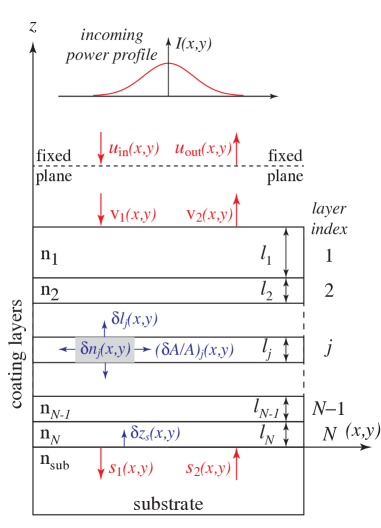
Coating Thermal Noise & Thin Films
Measure and reduce coating thermal noise — the dominant sensitivity limit in LIGO's most critical frequency band — through material characterization, computational optimization, and novel coating architectures including crystalline AlGaAs.
Learn more →Selected Publications
Key papers on LIGO commissioning, detector design, coatings, and next-generation interferometry.
-
2024 Effects of mirror birefringence and its fluctuations to laser interferometric gravitational wave detectors, Physical Review D.
Yuta Michimura, Haoyu Wang, Francisco Salces-Carcoba, Christopher Wipf, Aidan Brooks, Koji Arai, and Rana X. AdhikariAbstract
Crystalline materials are promising candidates as substrates or high-reflective coatings of mirrors to reduce thermal noises in future laser interferometric gravitational wave detectors. However, birefringence of such materials could degrade the sensitivity of gravitational wave detectors, not only because it can introduce optical losses, but also because its fluctuations create extra phase noise in the arm cavity reflected beam. In this paper, we analytically estimate the effects of birefringence and its fluctuations in the mirror substrate and coating for gravitational...
-
2024 Global optimization of multilayer dielectric coatings for precision measurements, Optics Express.
Gautam Venugopalan, Francisco Salces-Cárcoba, Koji Arai, and Rana X. AdhikariAbstract
We describe the design of optimized multilayer dielectric coatings for precision laser interferometry. By setting up an appropriate cost function and then using a global optimizer to find a minimum in the parameter space, we were able to realize coating designs that meet the design requirements for spectral reflectivity, thermal noise, absorption, and tolerances to coating fabrication errors. We also present application of a Markov-Chain Monte Carlo (MCMC) based parameter estimation algorithm that can infer thicknesses of dielectric layers in...
-
2022 The science case for LIGO-India, Classical and Quantum Gravity.
M. Saleem, Javed Rana, V. Gayathri, Aditya Vijaykumar, Srashti Goyal, Surabhi Sachdev, Jishnu Suresh, S. Sudhagar, Arunava Mukherjee, Gurudatt Gaur, Bangalore Sathyaprakash, Archana Pai, Rana X. Adhikari, P. Ajith, and Sukanta BoseAbstract
The global network of gravitational-wave detectors has completed three observing runs with ∼50 detections of merging compact binaries. A third LIGO detector, with comparable astrophysical reach, is to be built in India (LIGO-Aundha) and expected to be operational during the latter part of this decade. Such additions to the network increase the number of baselines and the network SNR of GW events. These enhancements help improve the sky-localization of those events. Multiple detectors simultaneously in operation will also increase the...
-
2022 Optimizing gravitational-wave detector design for squeezed light, Physical Review D.
Jonathan W. Richardson, Swadha Pandey, Edita Bytyqi, Tega Edo, and Rana X. AdhikariAbstract
Achieving the quantum noise targets of third-generation detectors will require 10 dB of squeezed-light enhancement as well as megawatt laser power in the interferometer arms—both of which require unprecedented control of the internal optical losses. In this work, we present a novel optimization approach to gravitational-wave detector design aimed at maximizing the robustness to common, yet unavoidable, optical fabrication and installation errors, which have caused significant loss in Advanced LIGO. As a proof of concept, we employ these techniques to...
-
2020 Measurement of mechanical losses in the carbon nanotube black coating of silicon wafers, Classical and Quantum Gravity.
L. G. Prokhorov, V. P. Mitrofanov, B. Kamai, A. Markowitz, Xiaoyue Ni, and R. X. AdhikariAbstract
The successful detection of gravitational waves from astrophysical sources carried out by the laser interferometric detectors LIGO and Virgo have stimulated scientists to develop a new generation of more sensitive gravitational wave detectors. In the proposed upgrade called LIGO Voyager, silicon test masses will be cooled to cryogenic temperatures. To provide heat removal from the test masses when they absorb the laser light one can increase their thermal emissivity using a special black coating. We have studied mechanical losses in...
-
2017 Towards the Fundamental Quantum Limit of Linear Measurements of Classical Signals, Physical Review Letters.
Haixing Miao, Rana X. Adhikari, Yiqiu Ma, Belinda Pang, and Yanbei ChenAbstract
The quantum Cramér-Rao bound (QCRB) sets a fundamental limit for the measurement of classical signals with detectors operating in the quantum regime. Using linear-response theory and the Heisenberg uncertainty relation, we derive a general condition for achieving such a fundamental limit. When applied to classical displacement measurements with a test mass, this condition leads to an explicit connection between the QCRB and the standard quantum limit that arises from a tradeoff between the measurement imprecision and quantum backaction; the QCRB...
-
2020 Astrophysics and cosmology with a decihertz gravitational-wave detector: TianGO, Physical Review D.
Kevin A. Kuns, Hang Yu, Yanbei Chen, and Rana X. AdhikariAbstract
We present the astrophysical science case for a space-based, decihertz gravitational-wave (GW) detector. We particularly highlight an ability to infer a source's sky location, both when combined with a network of ground-based detectors to form a long triangulation baseline, and by itself for the early warning of merger events. Such an accurate location measurement is the key for using GW signals as standard sirens for constraining the Hubble constant. This kind of detector also opens up the possibility to test...
-
2019 Exploring the sensitivity of gravitational wave detectors to neutron star physics, Physical Review D.
Denis Martynov, Haixing Miao, Huan Yang, Francisco Hernandez Vivanco, Eric Thrane, Rory Smith, Paul Lasky, William E. East, Rana Adhikari, Andreas Bauswein, Aidan Brooks, Yanbei Chen, Thomas Corbitt, Andreas Freise, Hartmut Grote, Yuri Levin, Chunnong Zhao, and Alberto VecchioAbstract
The physics of neutron stars can be studied with gravitational waves emitted from coalescing binary systems. Tidal effects become significant during the last few orbits and can be visible in the gravitational wave spectrum above 500 Hz. After the merger, the neutron star remnant oscillates at frequencies above 1 kHz and can collapse into a black hole. Gravitational wave detectors with a sensitivity of ≃ 10^(−24) strain/√Hz at 2–4 kHz can observe these oscillations from a source which is approximately...