
Image: Wenxuan Jia / MIT / Caltech/MIT/LIGO Lab
Precision photonics is the foundation of every measurement we make. We develop the optical enhancement cavities, nonlinear frequency converters, and high-performance coatings that push laser systems beyond conventional limits — from gravitational-wave detectors to energy applications.
In laser-driven inertial fusion, megajoules of energy must be delivered in precisely shaped nanosecond pulses. We are collaborating with Blue Laser Fusion through a DOE INFUSE award to apply our optical enhancement cavity technology — resonant structures that recycle photons to build up circulating power orders of magnitude above the input — to fusion energy.
We develop sum-frequency generation techniques for high-quantum-efficiency wavelength conversion, enabling low-noise readout at wavelengths where standard photodetectors fail. And our work on precision optical coatings — characterizing scattering, absorption, and damage thresholds — feeds directly into the mirror technology that sets the sensitivity floor of every interferometer we build.
Active Projects
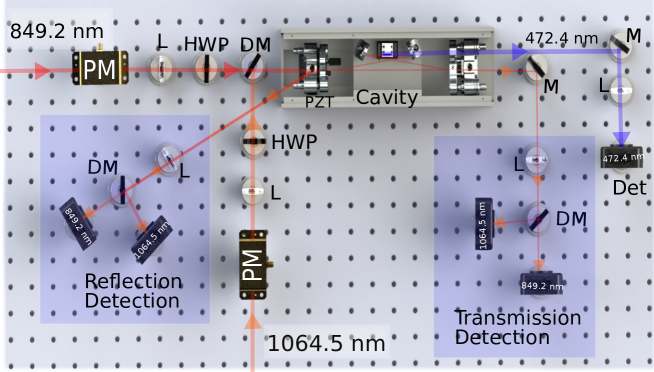
Sum Frequency Generation for high QE wavelength conversion
Cavity-enhanced sum-frequency generation to upconvert 2 µm photons to visible wavelengths, enabling silicon photodetectors with near-unity quantum efficiency for future gravitational-wave detectors.
Learn more →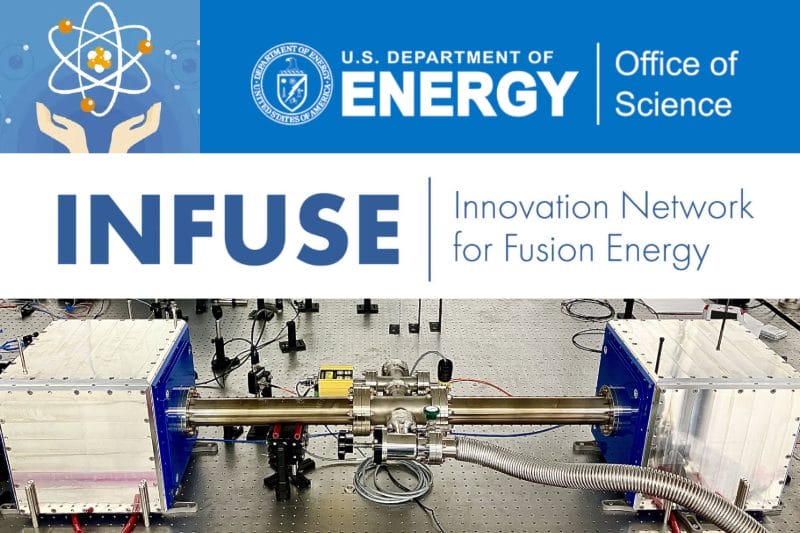
Optical Enhancement Cavities for Laser Fusion
Develop high-finesse optical enhancement cavities to recycle and shape laser pulses for inertial fusion and high-energy-density physics.
Learn more →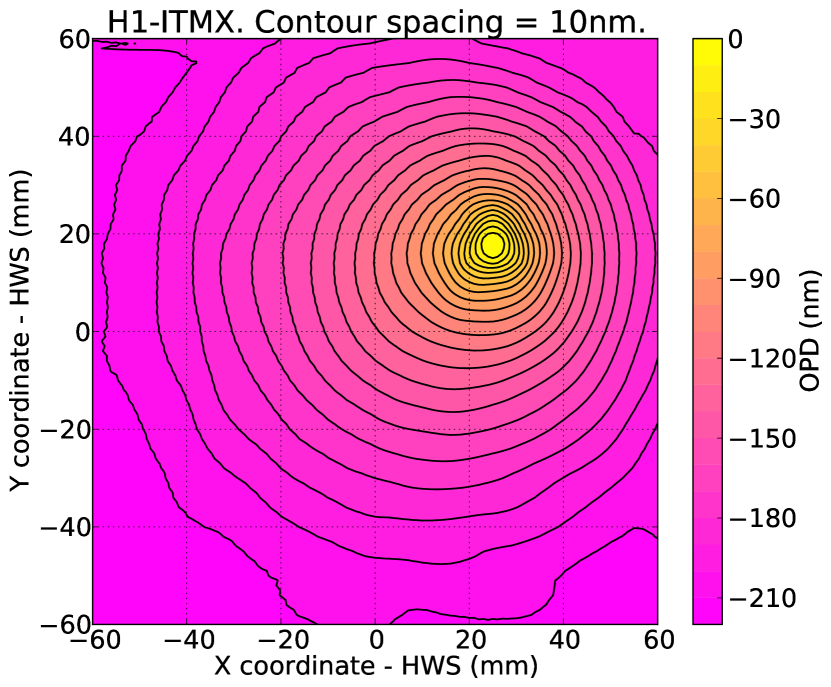
Precision Optical Coatings & Scattering
Characterize and improve optical coating performance — scattering, absorption, and damage threshold — for gravitational-wave detectors, fusion cavities, and precision optical systems.
Learn more →Selected Publications
Key papers on precision photonics, nonlinear frequency conversion, and optical system design.
-
2022 Scattering loss in precision metrology due to mirror roughness, Journal of the Optical Society of America A.
Yehonathan Drori, Johannes Eichholz, Tega Edo, Hiro Yamamoto, Yutaro Enomoto, Gautam Venugopalan, Koji Arai, and Rana X. AdhikariAbstract
Optical losses degrade the sensitivity of laser interferometric instruments. They reduce the number of signal photons and introduce technical noise associated with diffuse light. In quantum-enhanced metrology, they break the entanglement between correlated photons. Such decoherence is one of the primary obstacles in achieving high levels of quantum noise reduction in precision metrology. In this work, we compare direct measurements of cavity and mirror losses in the Caltech 40 m gravitational-wave detector prototype interferometer with numerical estimates obtained from semi-analytic...
-
2016 High power and ultra-low-noise photodetector for squeezed-light enhanced gravitational wave detectors, Optics Express.
Hartmut Grote, Michael Weinert, Rana X. Adhikari, Christoph Affeldt, Volker Kringel, Jonathan Leong, James Lough, Harald Lück, Emil Schreiber, Kenneth A. Strain, Henning Vahlbruch, and Holger WittelAbstract
Current laser-interferometric gravitational wave detectors employ a self-homodyne readout scheme where a comparatively large light power (5–50 mW) is detected per photosensitive element. For best sensitivity to gravitational waves, signal levels as low as the quantum shot noise have to be measured as accurately as possible. The electronic noise of the detection circuit can produce a relevant limit to this accuracy, in particular when squeezed states of light are used to reduce the quantum noise. We present a new electronic...
-
2012 A new bound on excess frequency noise in second harmonic generation in PPKTP at the 10^(−19) level, Optics Express.
D. Yeaton-Massey and R. X. AdhikariAbstract
We report a bound on the relative frequency fluctuations in nonlinear second harmonic generation. A 1064nm Nd:YAG laser is used to read out the phase of a Mach-Zehnder interferometer while PPKTP, a nonlinear crystal, is placed in each arm to generate second harmonic light. By comparing the arm length difference of the Mach Zehnder as read out by the fundamental 1064 nm light, and its second harmonic at 532 nm, we can bound the excess frequency noise introduced in the...
-
2012 Multicolor cavity metrology, Journal of the Optical Society of America A.
Kiwamu Izumi, Koji Arai, Bryan Barr, Joseph Betzwieser, Aidan Brooks, Katrin Dahl, Suresh Doravari, Jennifer C. Driggers, W. Zach Korth, Haixing Miao, Jameson Rollins, Stephen Vass, David Yeaton-Massey, and Rana X. AdhikariAbstract
Long-baseline laser interferometers used for gravitational-wave detection have proven to be very complicated to control. In order to have sufficient sensitivity to astrophysical gravitational waves, a set of multiple coupled optical cavities comprising the interferometer must be brought into resonance with the laser field. A set of multi-input, multi-output servos then lock these cavities into place via feedback control. This procedure, known as lock acquisition, has proven to be a vexing problem and has reduced greatly the reliability and duty...
-
2020 A Cryogenic Silicon Interferometer for Gravitational-wave Detection, Classical and Quantum Gravity.
R. X. Adhikari, Odylio Aguiar, K. Arai, Bryan Barr, and Riccardo Bassiri, et al.Abstract
The detection of gravitational waves from compact binary mergers by LIGO has opened the era of gravitational wave astronomy, revealing a previously hidden side of the cosmos. To maximize the reach of the existing LIGO observatory facilities, we have designed a new instrument able to detect gravitational waves at distances 5 times further away than possible with Advanced LIGO, or at greater than 100 times the event rate. Observations with this new instrument will make possible dramatic steps toward understanding...